

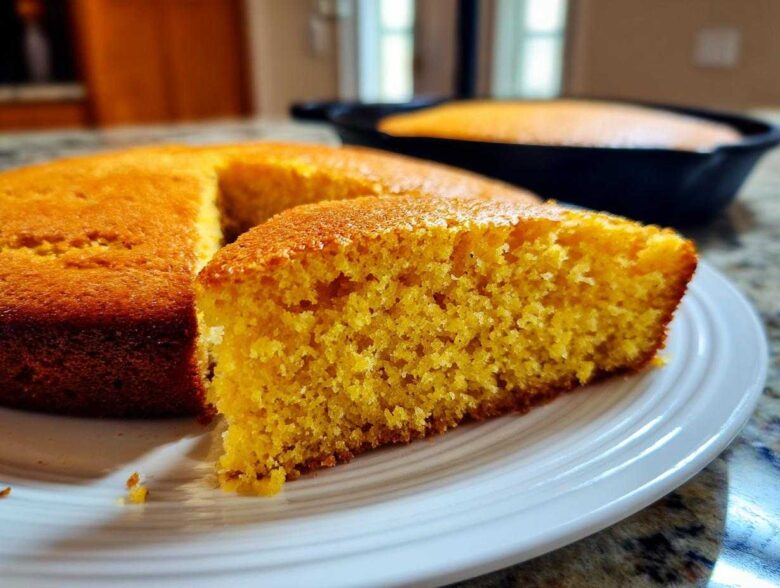
Oh, I have news that’s hotter than the coals underneath Grandpa’s old stove! If you, like Leo, are completely tired of cornbread that tastes suspiciously like cake, you’ve come to the right place. We’re talking about the ultimate texture contrast here today: those glorious, dark, crispy edges giving way to the most tender, savory interior you can imagine. This recipe is my current front-page headline: Authentic Southern Style Cornbread made right in a cast iron skillet. This skillet cornbread is our love letter to the South, completely unsweetened, just the way it should be for dipping into hearty bowls of chili. Clara and Leo are thrilled to share this one!
Why This Authentic Southern Skillet Cornbread Recipe Works
Honestly, Leo and I had to do a bit of deep research—lots of tasting, of course—to figure out exactly what makes a perfect piece of cornbread. It’s all about the battle between the crust and the center, and this recipe wins that fight every single time. This **skillet cornbread** embraces the tradition wholeheartedly. We rely on just a few key steps to guarantee success, and I want everyone to get those perfect results! If you need a hearty side for something like our best lentil soup, this bread is the answer. Here’s why it’s the best:
- We use buttermilk, which reacts perfectly with the baking soda for lift without making it taste cakey.
- The preparation of the skillet is non-negotiable; it’s the foundation of the whole experience.
- It keeps simple—no heaps of sugar to mask that lovely corn flavor.
The Secret to Crispy Skillet Cornbread Edges
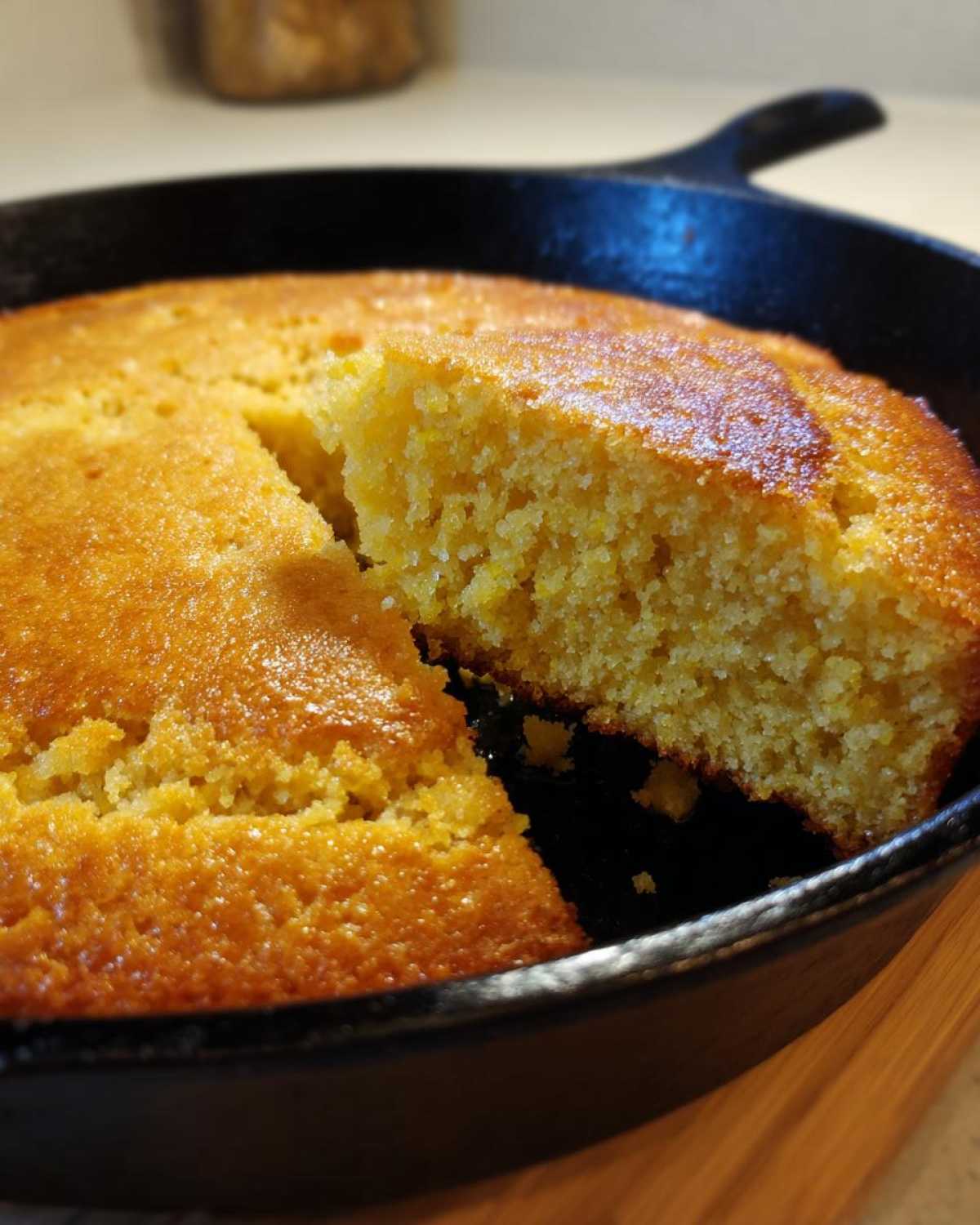
This is where most people drop the ball! You must treat your cast iron skillet like it’s a hot griddle ready for searing. We put the whole 10-inch skillet, dry, into the 400-degree oven while it preheats. Once it’s screaming hot, we sneak in a tablespoon of bacon grease and let that fat get shimmering hot before the batter ever touches it. That instant heat transfer is what locks in that gorgeous, shattering crispness around the outside that you just can’t replicate otherwise.
Achieving a Moist Buttermilk Cornbread Interior
Once you have that sizzling hot perimeter, we focus on the inside—the soft, savory crumb. Buttermilk is essential; it tenderizes the dough beautifully. Leo’s biggest rule, which I have to remind myself of constantly, is: only mix until the white streaks disappear. If you stir too much, you develop the gluten, and poof! Your **skillet cornbread** turns tough. A few lumps mean you’re on the right track for a wonderfully moist interior.
Gathering Your Ingredients for Skillet Cornbread
Alright, let’s get serious about the components for this incredible **skillet cornbread**. Since this is an old-fashioned, savory recipe, we’re keeping the ingredient list short and sweet, letting real corn and quality fats do the heavy lifting. You won’t find any sugar here—just pure, honest flavor. Before you start mixing, make sure you have your buttermilk ready and that bacon grease wonderfully rendered. If you’re looking for another classic bake, check out my secrets for classic buttermilk scones, too!
- 1 cup yellow cornmeal (not the fine kind!)
- 1 cup all-purpose flour
- 1 teaspoon baking soda
- 1/2 teaspoon salt
- 1/4 teaspoon black pepper
- 1 cup buttermilk
- 1 large egg, lightly beaten
- 1/4 cup rendered bacon grease, plus extra for the skillet (don’t skip this!)
Essential Equipment for Perfect Skillet Cornbread Baking
Leo always says you can’t play a symphony without the right instruments, and baking is no different, especially when we’re aiming for those famous rustic results. For this recipe, the equipment list is thankfully short, but one piece is absolutely the star of the show. We aren’t messing around with thin aluminum pans here; we need that heavy-duty workhorse that holds heat like a champ.
If you don’t own one yet, this recipe is the perfect excuse to finally invest in a good, seasoned cast iron skillet. It’s an heirloom piece, really, and nothing else gives you that phenomenal, crusty bottom and even bake. Here’s what you’ll need to pull this off:
- A 10-inch cast iron skillet. Don’t substitute this if you can avoid it!
- Two mixing bowls (one medium, one small) for separating your wet and dry mixes.
- A good whisk—one that can handle lumpy batter without too much fuss.
- Oven mitts that you aren’t afraid to get near a hot oven. Seriously, that skillet will be volcanic.
That’s it! See? It’s easy. Keep your tools simple, keep your focus on the beautiful cast iron, and you’ll be halfway to heavenly bread before you even start whipping up the batter.
Step-by-Step Instructions for Classic Skillet Cornbread
When you are baking something as elemental as this savory **skillet cornbread**, the sequence of steps matters more than the actual ingredients themselves. Leo treats this like a military operation, which I gently tease him about, but honestly, the precision he demands during the heating phase is what gives us that incredible result. We move quickly once the oven is hot, so make sure your bowls are ready to go! Once you’ve done the prep, this comes together faster than you think—perfect for a last-minute side dish for that stovetop chili we love.
Preheating the Skillet: The Key to Crispy Skillet Cornbread Edges
First, you absolutely must crank that oven up to 400 degrees Fahrenheit. Put your 10-inch cast iron skillet right inside while it preheats. I mean it—the pan needs to be scorching hot. Once the oven dings, you carefully pull that skillet out, add your tablespoon of extra bacon grease, and swirl it around until the entire bottom and sides are coated. Pop it back in for two more minutes. This step earns you those amazing **Crispy Skillet Cornbread Edges**. Don’t pull the pan out until that grease is shimmering!
Mixing the Batter for Moist Buttermilk Cornbread
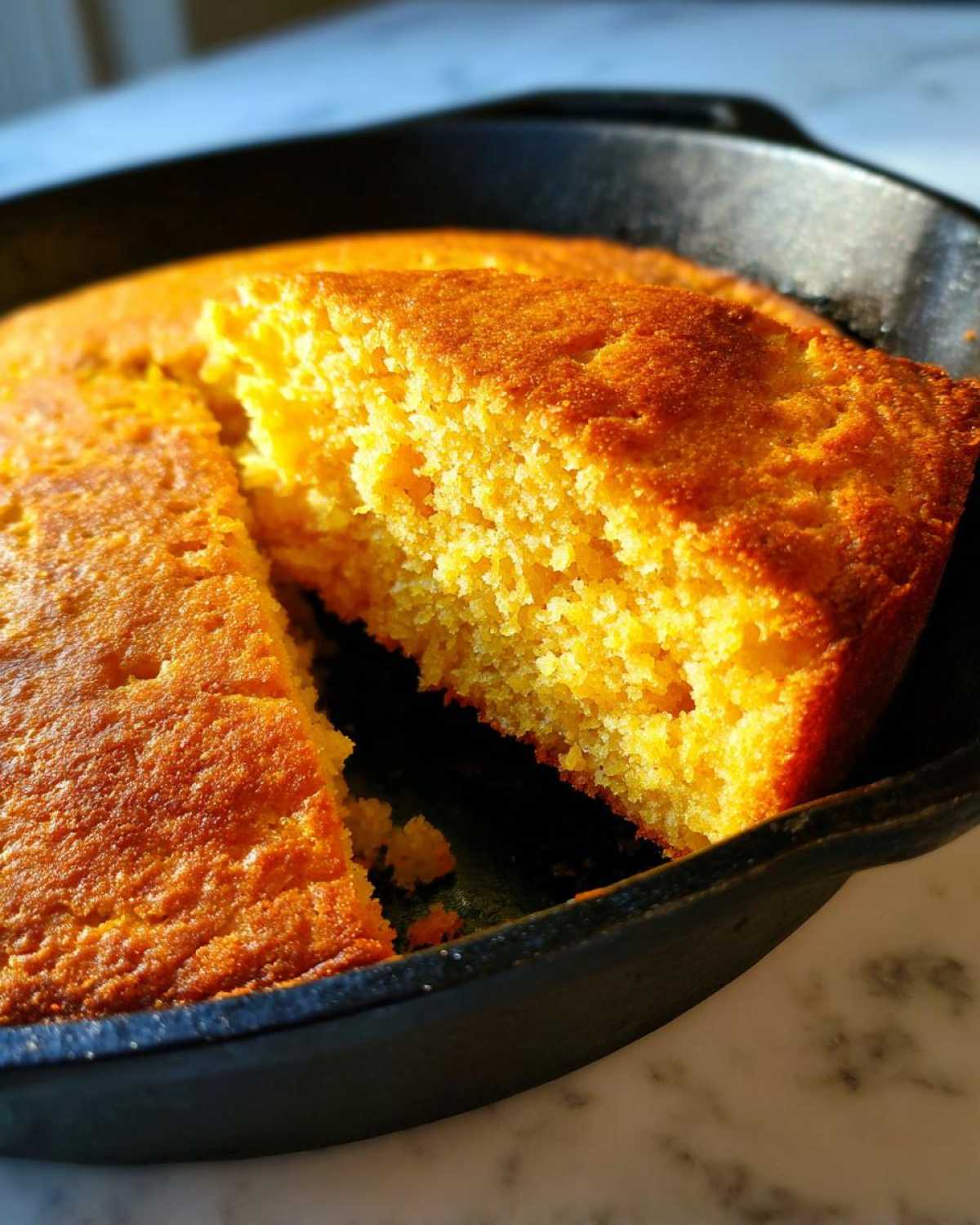
While the skillet is getting its second blast of heat, we whip up the batter. Keep it simple! Whisk all your dry things—cornmeal, flour, soda, salt, pepper—in one bowl. In the second bowl, mix up the wet stuff: buttermilk, egg, and the first chunk of your bacon grease. Now, here’s where I always mess up. I want everything smooth! But Leo stops me every time. He’ll say, “Clara, honey, stop stirring, it’s going to be tough!” You pour the wet into the dry and mix just until you don’t see any more dry flour pockets. A few lumps are the secret to a truly **moist buttermilk cornbread** interior in your **skillet cornbread**.
Quickly pour that sizzling batter into that waiting hot skillet—listen for that satisfying sizzle—and get it back in the oven right away. Bake it maybe 20 to 25 minutes, and you’re done!
Tips for Old Fashioned Cornbread Baking Success
Now that you’ve mastered the basic bake, let’s talk about how to elevate this from just ‘good’ to ‘legendary Southern Style Cornbread.’ Leo and I believe that baking well means understanding the ingredients, not just measuring them. We really lean into the traditional aspects here because, frankly, they work! When you’re aiming for that beautiful, rustic texture, a few little nuggets of wisdom go a long way. If you want to dive deeper into the history of this style of baking, check out my notes on old fashioned cornbread baking—it’s fascinating stuff!
Bacon Grease Cornbread Flavor Deep Dive
If you grew up down South, you know the secret is always in the fat. We insist on using rendered bacon grease here, and here’s why: it adds a deep, savory undertone that butter simply can’t touch. It’s the underpinning of true **Southern Style Cornbread** flavor. When that hot grease hits the pan, it fries the outer layer of the cornbread just slightly, creating a delicious richness that makes the crust perfect.
Now, Clara, I know you get anxious if you’re running low on rendered grease, so let’s talk substitutes. If you absolutely must use melted butter instead—which we’ll forgive you for, just this once—your cornbread will still bake up beautifully. It will taste less authentically rustic and more like a rich, buttery quick bread, but hey, it’s still delicious! Just remember, when Leo tastes it, he can usually tell the difference immediately and gives me that little disappointed side-eye. We only use butter if we’re out, but for the true experience, keep that bacon grease jar handy!
Variations on Your Skillet Cornbread Recipe
Now that you have the foundation for the best savory **skillet cornbread**—the crispy edges are calling your name!—you might want to jazz things up a bit. Leo loves improvising right before the batter hits the pan. If you’re feeling adventurous, adding ingredients to the wet or dry mix works like a charm without messing up our core texture rules.
For a little heat, stir in one finely diced jalapeño when you combine the wet and dry ingredients; don’t forget to scrape the seeds out unless you’re Leo on a spicy day! Or, if you want an even heartier side dish, try 1/2 cup of shredded sharp cheddar cheese mixed into the batter right before baking. If you are looking for a sweeter route in general, you might want to check out my recipe for sweet potato cornbread, but for this version, keep the savory spirit strong!
Serving Suggestions for Your Rustic Bread Recipe
This isn’t a dessert, friends; this is a proper side dish, designed to soak up flavor and stand up to whatever hearty meal you put on the table. Because our **Rustic Bread Recipe** is savory, it shines brightest next to rich, deeply flavored dishes. Leo insists that the best way to experience the crispy edges is to eat one piece plain while the other soaks up whatever delicious sauce is nearby!
Honestly, I think this warm cornbread—still hot from the cast iron—is the absolute perfect partner for a big bowl of soup. If you haven’t tried it with our easy ground beef stovetop chili yet, you are missing out on a foundational comfort food experience. The salty, buttery crumb is the perfect textural counterpoint to a soupy base.
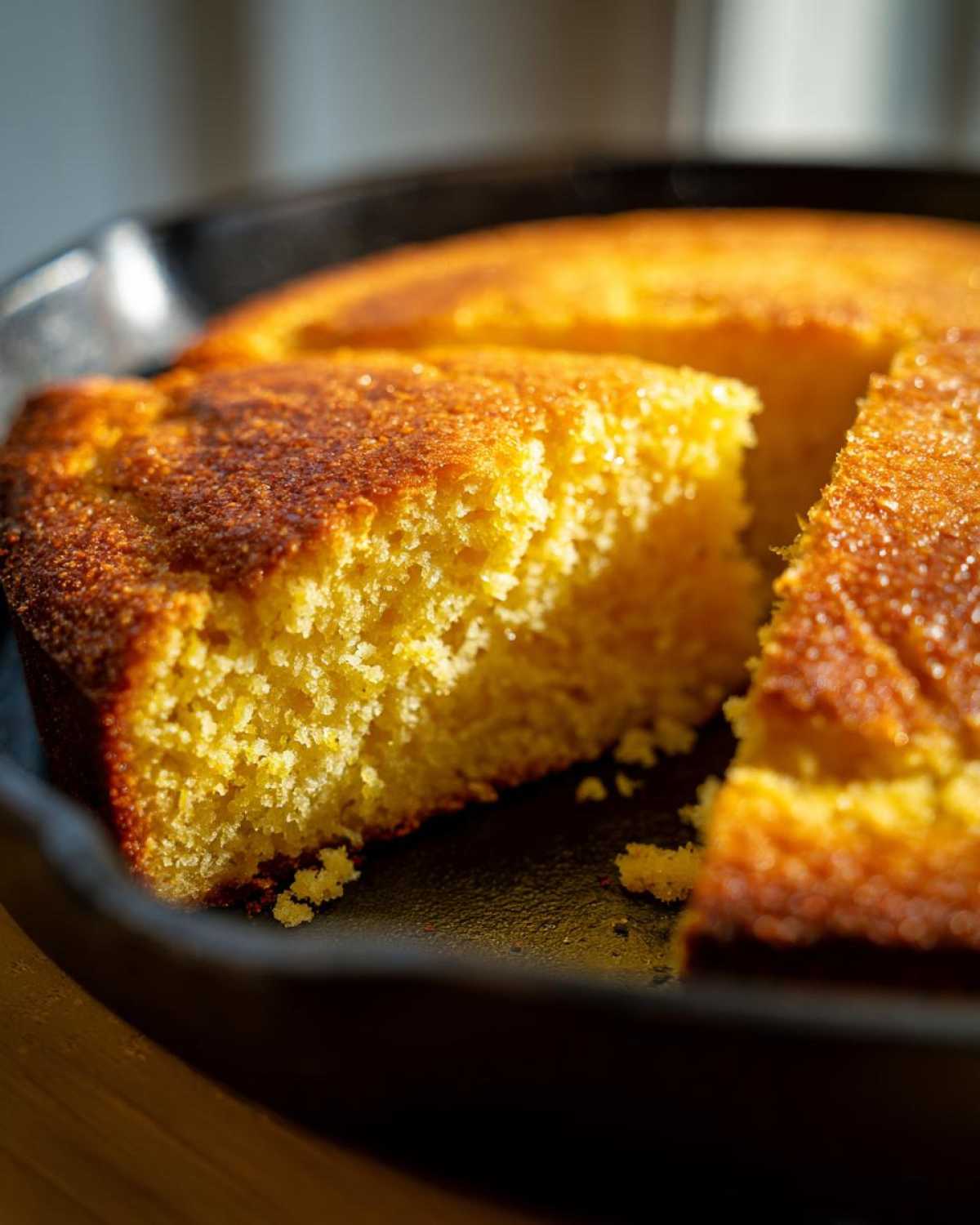
But it’s also wonderful alongside greens! Think slow-cooked collards or turnip greens—that savory cornbread is just phenomenal for mopping up the pot liquor left behind. If you’re looking for something a little sweeter to balance out a savory main course, some folks prefer adding a drizzle of honey after it cools. You can see an example of that approach over here if you’re looking for a sweeter cornbread fix, but for this classic bake, I highly recommend keeping it savory!
Keep a pat of butter melting on top while it’s piping hot, and you have sheer perfection. It’s the meal’s MVP, no question.
Storing and Reheating Your Skillet Cornbread
Now, I know what you’re thinking: how do I keep this glorious **skillet cornbread** from becoming just… okay… the next day? Because yes, great cornbread is best eaten the moment it comes out of that hot skillet, but we all have leftovers, right? I’ve learned a few tricks over the years to keep that magic alive, especially when it comes to saving those precious crispy edges we worked so hard to create!
When it comes to storing, wrapping it tightly is your friend. Once it’s fully cooled down—and I mean totally cooled, or you’ll trap steam and get sogginess—wrap the pieces tightly in plastic wrap, and then tuck that into a zip-top bag or an airtight container. You can keep it on the counter for about two days, or tuck it into the fridge if your kitchen is super humid. If you want something equally hearty for later, you might want to check out my notes on bakery-style homemade bread bowls!
The real trick, though, is reheating. If you just microwave it, you’ll lose everything good about the bake. Forget that! Leo knows that if I’m reheating yesterday’s **skillet cornbread**, it has to go into a moderate oven (about 350°F) or, even better, back into the cast iron skillet itself for just about 5 to 7 minutes. You need dry heat to bring back that structure.
If you’re bringing a single slice back to life, just place it directly onto a dry, non-stick skillet over medium-low heat for a couple of minutes per side. It’s amazing how quickly that lovely, slightly firm crust returns. In a few minutes, you’ll have that satisfying crunch back, and it’ll taste almost as good as fresh!
Frequently Asked Questions About Skillet Cornbread
Leo and I get so many wonderful notes from folks trying out this recipe, and usually, the questions all circle back to texture and tradition. It’s natural! When something works this well, you want to know the boundaries. We’re happy to share some final wisdom here collected from our own kitchen experiments and what we’ve learned from you all. If you’re looking for other great ways to get corn into your rotation, my chicken corn chowder is a real treat!
Can I make this a sweet cornbread with honey instead?
That’s the million-dollar question, isn’t it? This specific recipe is for an **Authentic Southern** bake, which means we stick firmly to the savory side—no sugar added! We want that rich, almost salty flavor profile that pairs perfectly with chili. If you’re someone who really loves that sweetness, you absolutely can adapt it! You’d need to cut the baking soda down a bit since the sugar impacts the reaction, and then about 1/4 cup of honey or maple syrup would be a good starting point. You might find that even so, you’ll want to bake it in a way that still encourages those **Crispy Skillet Cornbread Edges** to form, even if the inside is sweeter. Just know you’re venturing into a different territory than this classic recipe!
What is the best way to clean a cast iron skillet after baking cornbread?
Oh, please, never, ever put your cast iron in the dishwasher! That’s a great way to ruin your seasoning instantly. This is where Leo gets very protective of his pans. The best way to handle the cleanup is immediately after you’ve served the cornbread and the pan has cooled just slightly—still warm is best. Scrape out any large crumbs with a rubber spatula. Then, run it under hot water and use a sturdy scrubber or a chainmail scrubber if you have one; avoid soap unless it’s really necessary, and if you do use soap, make sure it’s tiny amount. Rinse thoroughly. Then, the crucial step for true **Old Fashioned Cornbread Baking** success: dry it immediately on the stovetop over low heat until every drop of water has evaporated. If you see any sticky spots remaining, that’s when you rub in a teaspoon of fresh oil—like a bit more bacon grease—and wipe it clean.
Estimated Nutritional Data for This Homemade Cornbread Recipe
I always feel a little silly publishing this part, honestly! Leo reminds me that people want to know what they’re putting into their bodies, but my focus is always on the joy of the bake, not the counting of calories. Think of these numbers as a general guideline; they’re estimates based on the ingredients we used in our test batch and certainly don’t account for extra butter we might slather on top later!
Keep in mind that this is a relatively rustic, savory bake, not a dessert, so the sugar count is wonderfully low, which is what we aimed for with this **Homemade Cornbread Recipe**. If you decide to add things like cheddar or honey, of course, those numbers will shift!
Here is a snapshot of the estimated macro picture for one slice (this recipe yields 8 hearty servings):
- Serving Size: 1 slice
- Calories: 210
- Fat: 11g (This includes that lovely bacon grease!)
- Saturated Fat: 4g
- Protein: 5g
- Carbohydrates: 24g
- Fiber: 1g
- Sugar: 1g (See? It’s barely there!)
We consider this a wholesome side dish, meant to complement something packed with other fresh ingredients, like a big bowl of soup or greens. Eat it up and enjoy that fantastic **Buttery Skillet Baked Goods** experience without worry!
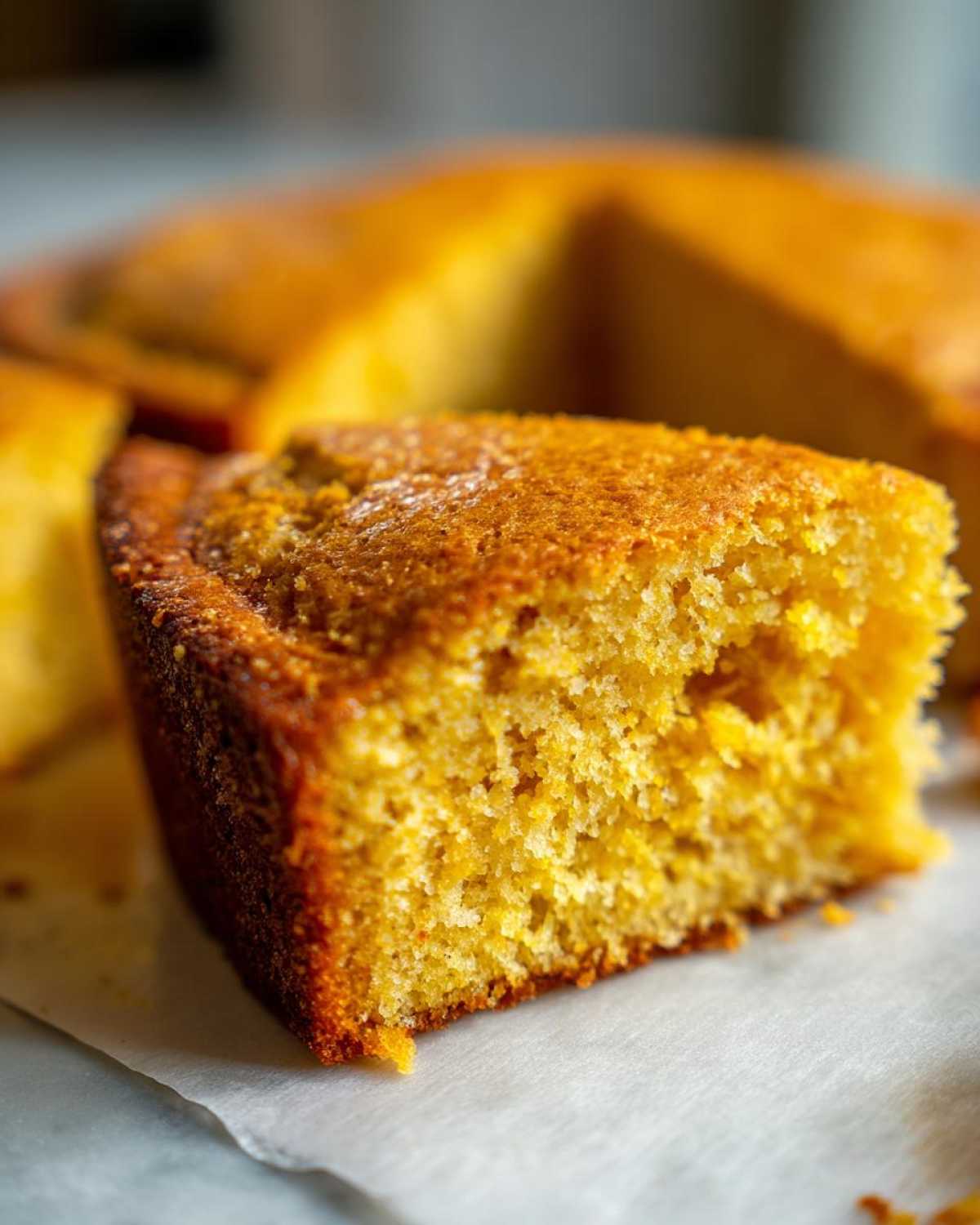
Share Your Tasty Tribune Skillet Cornbread Creations
Well, that’s our song for today, friends! We’ve gone from a sputtering, cold skillet all the way up to that glorious, golden-brown crust. Now it’s your turn to join the composition! Leo has already declared this the official best **skillet cornbread** recipe we’ve ever tested, and I’m itching to hear what you think.
Please, please, when you pull that beautiful, rustic bread out of the oven, give us a shout! We absolutely live for your feedback. Did you manage to keep your edges perfectly crispy? Did you slather it with butter while it was still too hot to handle? If you rate this recipe 5 stars, you’re officially joining our inner circle of cornbread aficionados. My favorite part is reading through the comments to see what you served it with.
Did this savory **Homemade Cornbread Recipe** stand up perfectly to a giant bowl of smoky chili, or did you use it to sop up those wonderful pot likker greens we talked about? Pop over to our contact page and let us know the score! We love seeing your kitchens in action. Happy baking, everyone!
PrintAuthentic Southern Cast Iron Skillet Cornbread (No Sugar Added)
Make this classic Southern cornbread in a cast iron skillet for irresistibly crispy edges and a moist, savory interior. This easy recipe uses buttermilk and bacon grease for true old-fashioned flavor.
- Prep Time: 10 min
- Cook Time: 25 min
- Total Time: 35 min
- Yield: 8 servings
- Category: Side Dish
- Method: Baking
- Cuisine: Southern American
- Diet: Vegetarian
Ingredients
- 1 cup yellow cornmeal
- 1 cup all-purpose flour
- 1 teaspoon baking soda
- 1/2 teaspoon salt
- 1/4 teaspoon black pepper
- 1 cup buttermilk
- 1 large egg, lightly beaten
- 1/4 cup rendered bacon grease, plus extra for the skillet
Instructions
- Preheat your oven to 400 degrees Fahrenheit. Place your 10-inch cast iron skillet in the oven while it preheats. You want that skillet hot!
- In a medium bowl, whisk together the cornmeal, flour, baking soda, salt, and pepper. This is your dry mix.
- In a separate small bowl, whisk together the buttermilk, the beaten egg, and the 1/4 cup of bacon grease.
- Carefully remove the hot skillet from the oven. Add about 1 tablespoon of extra bacon grease to the hot skillet, swirling it around to coat the bottom and sides completely. Return the skillet to the oven for 2 minutes to let the grease get smoking hot.
- Pour the wet ingredients into the dry ingredients. Mix them together just until combined. Do not overmix; a few lumps are fine.
- Carefully pour the batter into the hot, greased skillet. The batter should sizzle immediately when it hits the pan.
- Bake for 20 to 25 minutes, or until the top is golden brown and a toothpick inserted into the center comes out clean.
- Let the cornbread cool in the skillet for 5 minutes before slicing and serving immediately. Enjoy those crispy skillet cornbread edges!
Notes
- For the best crispy edges, make sure your cast iron skillet is fully preheated with the fat shimmering hot before you pour in the batter.
- If you do not have bacon grease, you can substitute with 1/4 cup of melted unsalted butter, though the flavor will change slightly from the traditional Southern style.
- This savory cornbread is the best cornbread for chili or beans.
Nutrition
- Serving Size: 1 slice
- Calories: 210
- Sugar: 1
- Sodium: 350
- Fat: 11
- Saturated Fat: 4
- Unsaturated Fat: 7
- Trans Fat: 0
- Carbohydrates: 24
- Fiber: 1
- Protein: 5
- Cholesterol: 35