Juicy Oven Roasted Pork Loin Roast
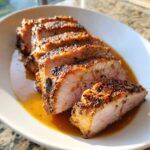
Follow this simple recipe for a tender, juicy pork loin roast cooked perfectly in the oven, complete with instructions for a quick pan sauce.
- Prep Time: 10 min
- Cook Time: 75 min
- Total Time: 85 min
- Yield: 6 servings
- Category: Dinner
- Method: Oven Roasting
- Cuisine: American
- Diet: Low Fat
Ingredients
Scale
- 3 lb pork loin roast, bone-out
- 2 tablespoons olive oil
- 1 tablespoon kosher salt
- 1 teaspoon black pepper
- 1 teaspoon garlic powder
- 1 teaspoon dried thyme
- 1/2 teaspoon paprika
- 1 cup chicken broth (for pan sauce)
- 1 tablespoon cornstarch (for pan sauce)
Instructions
- Preheat your oven to 400 degrees Fahrenheit.
- Pat the pork loin roast completely dry with paper towels. This helps create a good crust.
- In a small bowl, mix together the kosher salt, black pepper, garlic powder, dried thyme, and paprika.
- Rub the olive oil all over the pork loin roast.
- Sprinkle the spice mixture evenly over the entire surface of the roast, pressing gently to make it stick.
- Place the seasoned pork loin roast in a roasting pan or a large oven-safe skillet.
- Roast at 400 degrees Fahrenheit for 15 minutes.
- Reduce the oven temperature to 350 degrees Fahrenheit. Continue roasting until the internal temperature reaches 145 degrees Fahrenheit on a meat thermometer, which usually takes about 15 to 20 minutes per pound.
- Remove the roast from the oven when it hits 145 degrees Fahrenheit. Tent it loosely with foil and let it rest for at least 10 minutes before slicing. This resting time is key for a juicy pork loin.
- While the pork rests, make the pan sauce. Place the roasting pan over medium heat on the stovetop (if using an oven-safe skillet, leave it there). Scrape up any browned bits from the bottom of the pan.
- Pour in the chicken broth and bring to a simmer, stirring well.
- In a small cup, whisk the cornstarch with 2 tablespoons of cold water to create a slurry. Pour the slurry into the simmering broth, whisking constantly until the sauce thickens slightly.
- Slice the rested pork loin roast against the grain and serve immediately with the pan sauce gravy.
Notes
- For the best results, start with a roast that is close to room temperature before seasoning and cooking.
- Use a reliable meat thermometer inserted into the thickest part of the roast, avoiding bone, to accurately check for the 145 degrees Fahrenheit internal temp.
- If you prefer a stronger herb flavor, use fresh rosemary instead of dried thyme.
Nutrition
- Serving Size: 4 oz cooked
- Calories: 350
- Sugar: 1
- Sodium: 450
- Fat: 18
- Saturated Fat: 6
- Unsaturated Fat: 12
- Trans Fat: 0
- Carbohydrates: 2
- Fiber: 0
- Protein: 42
- Cholesterol: 110
Find it online: https://tastytribune.com/pork-loin-roast-juicy-easy-oven-recipe/